
Use the trail record to locate the question
A restroom beside a walking route must serve people without occupying their route. Identify the separate space a supplier can actually reach.
MDOT’s August 2024 approved agenda records a Renova pedestrian-trail extension and improvement project along Old Highway 61 and Happy Street. That dated award record identifies a corridor; it does not establish the trail’s present condition or current work.
For activity adjoining that corridor, have the property contact identify the boundary between the walking route and the proposed equipment area. Obtain current permission for that area before asking the provider to assess it.
Draw two different approaches
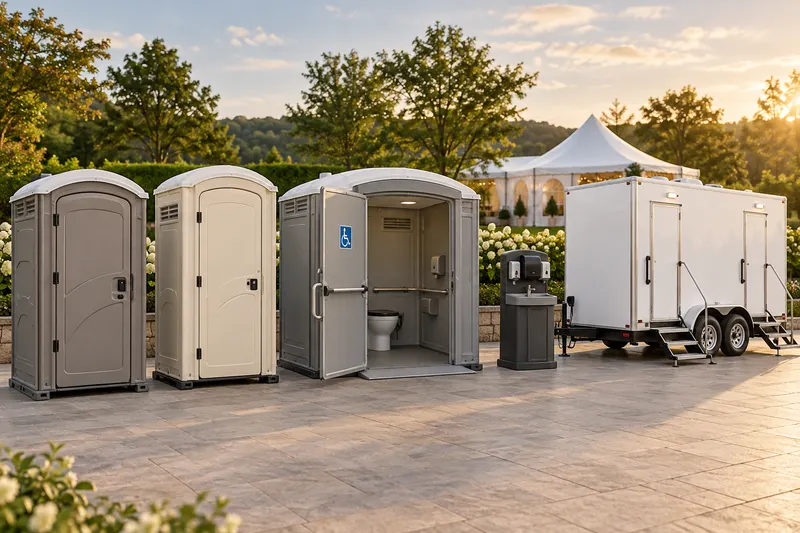
Show how users will reach a standard cabin, washing station and suitable accessible equipment without stepping into supplier movements. Keep door and waiting space outside the through route.
Show the provider a separate vehicle approach and standing position for delivery and later care. A pedestrian improvement does not prove a path is suitable or authorised for a service vehicle.
Keep the corridor usable after setup
Ask the organiser to check whether parked cars, temporary signs or supplies narrow the agreed pedestrian space during use. Agree who can correct that obstruction without moving the rental equipment themselves.
Describe users, dates and occupied hours in the quote request. Confirm cleaning, tank and wash-water care, consumables, transport and collection against the approved arrangement, and reassess it if the activity moves.
Questions before you book
Does the 2024 award prove there is construction now?
No. Confirm the present site and any current work with the responsible contact.
Can the walking trail be used for servicing?
Only if its controller authorises the actual access and the provider confirms suitability; do not infer that from its existence.